
From industrial workshops to small fabrication studios, the right equipment directly determines processing efficiency and final product quality.
Among the most impactful technologies shaping modern metalworking are MIG welders and plasma cutters.
This guide provides a clear, practical overview of how these machines work, their core features, and the business value they bring to metal fabrication operations.
If you are evaluating equipment upgrades or expanding your production capabilities, understanding these tools is a strategic first step.

Understanding the Fundamentals
What Is a MIG Welder?
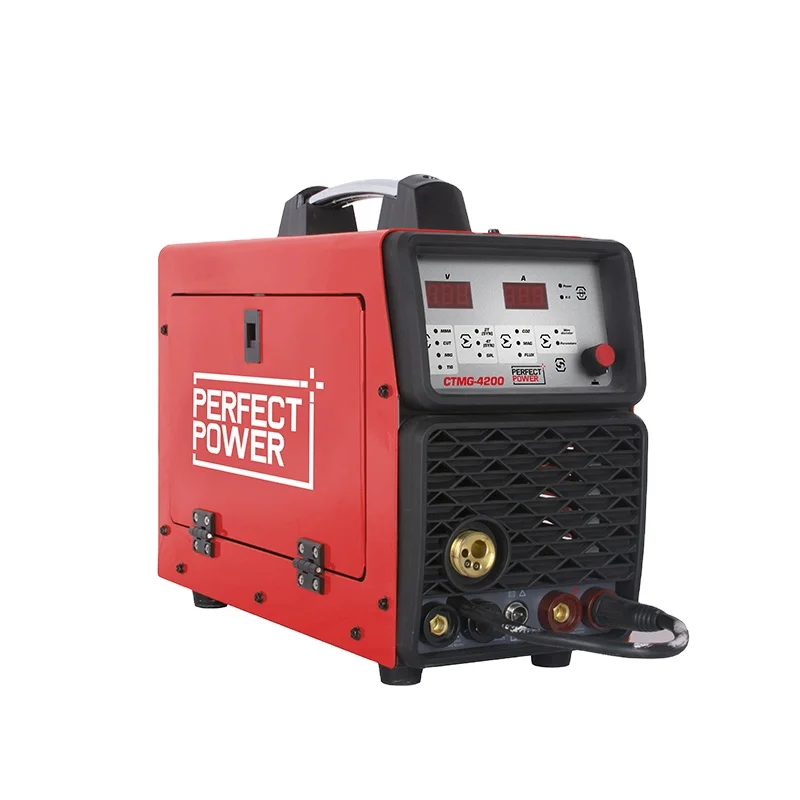
A MIG welder (Metal Inert Gas welder) uses a continuous wire electrode and electrical current to fuse metal components together.
During operation, the wire is fed automatically through a welding torch, creating an electric arc that melts both the electrode and the base material.
An inert shielding gas—commonly argon or an argon and CO₂ mixture—protects the molten weld pool from oxidation and atmospheric contamination.
This process delivers consistent weld quality, making MIG welding one of the most widely adopted methods in industrial fabrication.
What Is a Plasma Cutter?
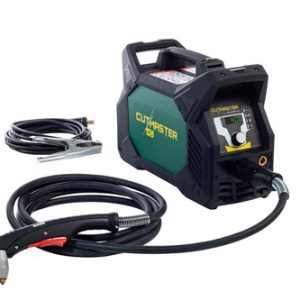
A plasma cutter is designed for fast and accurate metal cutting using a high-temperature plasma arc.
Compressed gas is forced through a narrow nozzle while an electrical arc ionizes the gas, transforming it into plasma.
The resulting plasma jet reaches extreme temperatures, allowing it to melt metal instantly and blow away molten material,
producing clean cuts across a wide range of conductive metals.
Key Features That Drive Performance
MIG Welder Capabilities
- Adjustable wire feed speed for precise weld control
- Variable power output to handle different material thicknesses
- Thermal overload protection to enhance equipment reliability
- Compact and portable design for flexible job-site use
Plasma Cutter Capabilities
- High cutting speed compared to conventional methods
- Clean and precise cuts with minimal slag
- Broad material compatibility including steel, stainless steel, and aluminum
- Lightweight construction for easy transport and setup
How These Machines Work in Practice
MIG Welding Process
During MIG welding, an electric arc forms between the wire electrode and the workpiece.
Both materials melt simultaneously, creating a weld pool that solidifies into a strong, durable joint.
Continuous gas shielding ensures stable arc performance and consistent weld integrity.
Plasma Cutting Process
When activated, the plasma cutter ionizes gas within the torch to generate plasma with temperatures reaching up to 30,000°C.
This focused energy stream melts the metal along the cutting path while high-velocity gas removes molten residue,
resulting in smooth, accurate cuts.
Why MIG Welders and Plasma Cutters Are a Smart Investment
Operational Efficiency
These machines significantly reduce processing time for welding and cutting tasks,
enabling higher throughput and improved production scheduling.
Precision and Consistency
Stable arc control and clean cutting performance translate into higher-quality outputs,
reducing rework and material waste.
Application Versatility
From light fabrication to heavy industrial use, MIG welders and plasma cutters adapt easily to different metals,
thicknesses, and project requirements.
User-Friendly Operation
Intuitive controls and automated functions make these machines accessible even to operators with limited experience,
reducing training time and operational risk.
Selecting the right welding and cutting equipment is a strategic decision for any metalworking operation.
MIG welders and plasma cutters combine speed, accuracy, and flexibility,
helping businesses enhance productivity while maintaining high quality standards.
If you are looking to upgrade your workshop capabilities or expand your fabrication scope,
these technologies offer a proven and scalable solution.
Contact us to learn how the right MIG welder and plasma cutter configuration can support your production goals
and deliver long-term operational value.


 English
  Spanish
  Russian