

Water jet cutting is a powerful technique that utilizes a high-speed water stream to cut through materials with exceptional precision. When compared to traditional and advanced cutting methods, it stands out due to its unique advantages, making it the preferred choice across various industries. In the following sections, we’ll delve into how water jet cutting excels in accuracy, versatility, and efficiency.
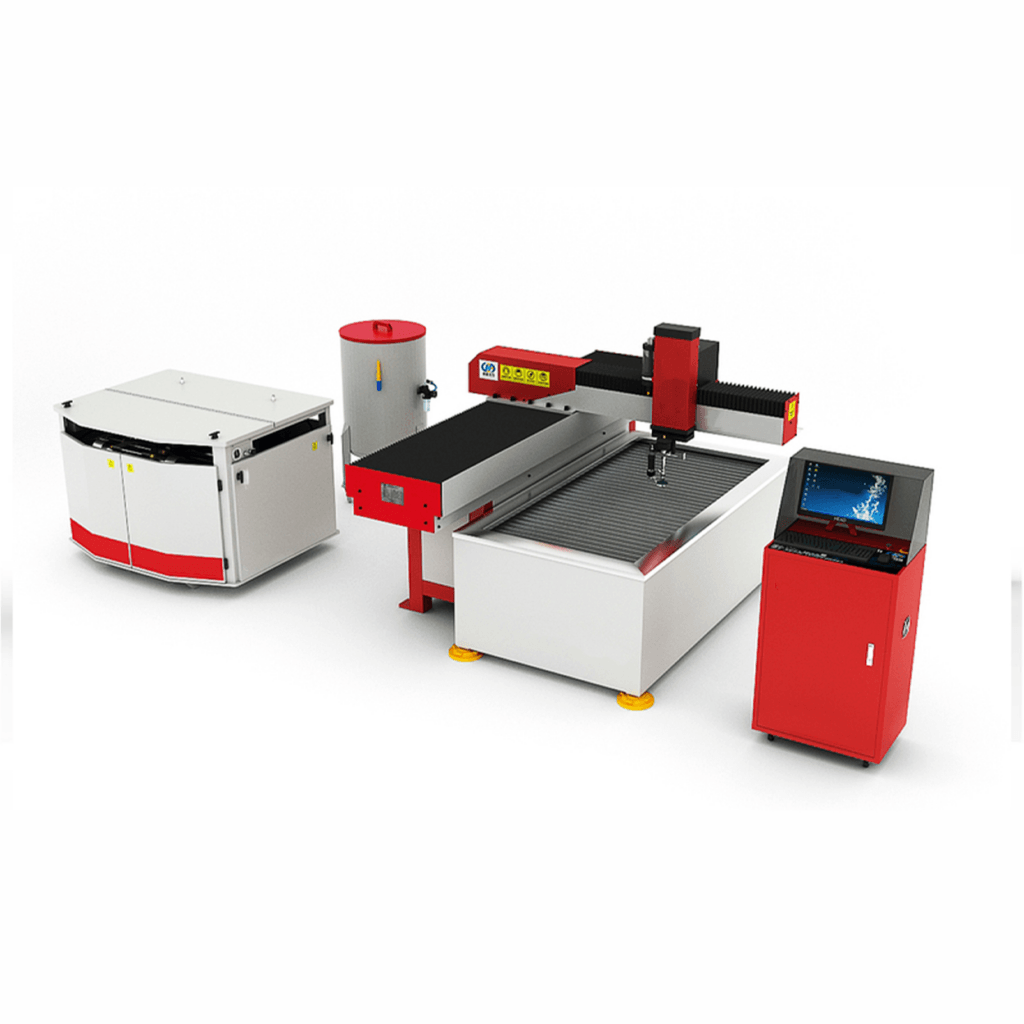
Comparison with Traditional Cutting Methods
Traditional cutting methods, such as mechanical and gas flame cutting, focus on simplicity and low cost. However, mechanical cutting often lacks the precision required for fine cuts and leaves burrs that necessitate additional finishing. Additionally, mechanical cutting can damage delicate materials, which further limits its applications. Gas flame cutting, while suitable for rough metalwork, offers low precision and induces thermal distortion that can warp the material. In contrast, this cutting technology consistently delivers clean, burr-free cuts without generating heat, which makes it an ideal solution for a much broader range of materials.
Comparison with Plasma Cutting
Plasma cutting relies on high temperatures to slice through materials, making it a fast and effective method for cutting thin metals, such as stainless steel. However, plasma cutting has significant drawbacks. Its thermal effects can distort heat-sensitive materials and lead to surface oxidation. By contrast, water jet cutting operates as a cold cutting process, which eliminates any risk of thermal deformation. As a result, this cutting tchnology produces smooth, distortion-free cuts. Furthermore, water jet cutting can handle a much wider range of materials, including those with low melting points, giving it a versatility that plasma cutting cannot match.
Comparison with Wire Cutting
Wire cutting is known for its high precision, especially in metal processing, but it is slower and less efficient, particularly for large-scale projects. Additionally, wire cutting often requires pre-processing steps such as hole punching, which adds both time and complexity to the process. Water jet cutting, on the other hand, offers a faster and more flexible alternative. It can cut a variety of shapes, materials, and sizes without needing extensive preparation, providing a more efficient solution. Moreover, with the aid of advanced robotic technology, water jet cutting can handle intricate and large-scale designs with ease, making it a more versatile and efficient choice for many applications.
Comparison with Laser Cutting
Laser cutting is celebrated for its speed and precision, particularly with thin materials. However, it has several limitations. For instance, laser cutting struggles with reflective materials like aluminum and copper, and its performance deteriorates with thicker materials. Moreover, the thermal effects from laser cutting can compromise the quality of the cut, particularly for heat-sensitive materials. Additionally, laser cutting equipment is often costly, and its operation and maintenance can incur substantial ongoing expenses. In contrast, water jet cutting produces smooth, precise cuts without thermal distortion, making it a more cost-effective and versatile solution. Water jet cutting can also handle thicker and more varied materials, which makes it a superior choice in many cases.
Comparison with Other Cutting Methods
Other cutting methods, such as stamping and flame cutting, also have their strengths but come with limitations. Stamping, while efficient, requires specialized molds, which reduces its flexibility. Flame cutting, although effective for cutting thicker materials, leaves rough edges and offers lower precision than water jet cutting. Additionally, it introduces significant thermal effects, which can damage certain materials. Water jet cutting, however, offers greater adaptability and higher precision, providing clean, accurate cuts without the need for specialized molds. This makes it particularly valuable for cutting high-hardness and thick materials, where traditional methods may fail.
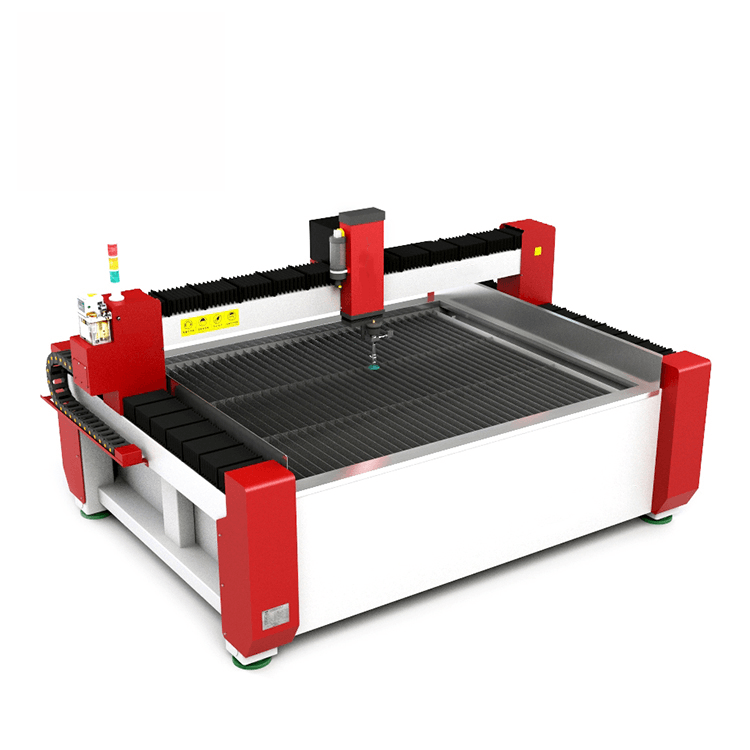
Unique Applications of Water Jet Cutting
Water jet technology extends beyond standard industrial applications and serves in highly specialized fields. For example, in bomb disposal and weapons decommissioning, where high temperatures are hazardous, this is the safest, most effective option. Similarly, in the food processing industry, water jet cutting is used to cut frozen foods in a safe, hygienic, and pollution-free manner. In stone processing, water jet cutting excels by enabling highly detailed and intricate pattern cutting, which is essential for architectural decoration. This is something that other methods, such as mechanical cutting or flame cutting, cannot achieve.
Why Choose Us?
With over ten years of experience in industrial cutting, we provide customized this cutting technology solutions that meet your specific requirements. Our track record of successful projects and satisfied clients speaks to our commitment to quality, reliability, and precision. We back our products with a one-year warranty and offer 24-hour online support to ensure you receive top-notch service whenever needed. Choose us for cutting-edge solutions that combine superior performance, efficiency, and outstanding customer service.


 English
  Spanish
  Russian